The Price of Being Different: How Fashion Economics Punish Personal Style
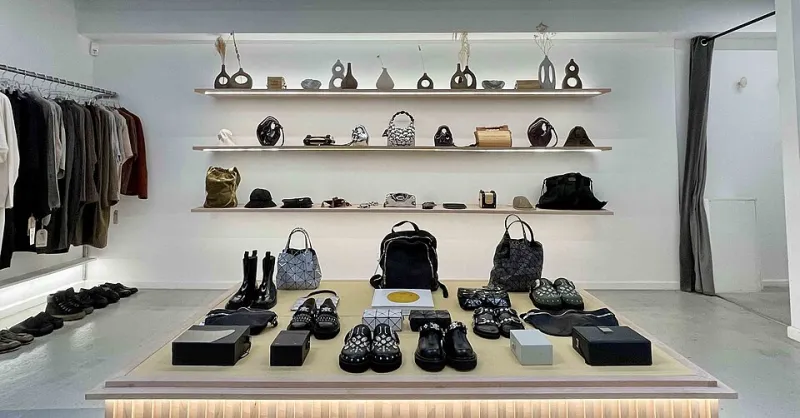
Photo: JasminUJNG, CC BY-SA 4.0, via Wikimedia Commons
There is an unspoken transaction embedded in every wardrobe decision. When you choose to dress like everyone else, the market rewards you with accessibility, affordability, and abundance. When you choose to dress like yourself — distinctly, deliberately, on your own terms — the market extracts a premium. Call it the individuality surcharge. Call it the cost of conviction. Either way, it is real, it is structural, and very few people in the fashion conversation are willing to name it plainly.
At RFLCT, we believe that style is not decoration. It is definition. But definitions, it turns out, are expensive.
Why Conformity Gets a Discount
The economics of mass fashion are built on a single principle: volume reduces cost. When a fast fashion retailer produces 50,000 units of the same straight-leg trouser in four neutral colorways, the per-unit cost collapses. Fabric is sourced in bulk. Patterns are standardized. Marketing is broad and cheap because the audience is everyone.
Trend-following, by its very nature, aligns with this model. When millions of consumers simultaneously want the same silhouette — the barrel-leg jean, the oversized blazer, the ballet flat — the supply chain mobilizes at scale, and prices stay low. Conformity, in this system, is subsidized.
Capsule wardrobe culture compounds this dynamic. The movement toward a curated selection of neutral, interchangeable basics appears to champion intentionality, but it also quietly champions the most commercially convenient aesthetic imaginable. Ivory linen, charcoal wool, navy cotton — these are not just timeless choices. They are the colors and fabrics that every major retailer overproduces. The capsule wardrobe, for all its philosophical appeal, is accidentally optimized for a market that profits from predictability.
The Independent Brand Premium
Now consider the alternative. An independent designer working out of Portland or Brooklyn or a small studio in the Hudson Valley produces a run of 300 garments. The fabric is sourced from a specialty mill. The cut is unusual — intentionally so. The silhouette challenges convention rather than confirms it.
The price point is three, four, sometimes five times higher than its mass-market equivalent.
This is not exploitation. It is arithmetic. Small-batch production cannot access the economies of scale that mainstream retail depends on. Independent designers frequently pay living wages in domestic or near-domestic supply chains. Their materials are selected for longevity and character rather than cost efficiency. And because their audience is, by definition, smaller, marketing costs per customer are higher.
The consumer who gravitates toward these pieces — who wants something that feels singular, that carries a point of view — absorbs all of that structural cost. Individuality, in fashion, is a niche product. And niche products carry niche pricing.
The Psychology Behind the Premium
Beyond pure economics, there is a psychological dimension to what distinctive style costs. Research in consumer behavior consistently shows that people who define themselves through personal style — rather than trend adoption — invest more emotional labor in their purchasing decisions. They research longer, deliberate more carefully, and experience greater anxiety around perceived mistakes.
This emotional overhead is itself a form of cost. The trend-follower can walk into any major retailer and find immediate validation in the form of abundant inventory and social proof. The style individualist often cannot. They are searching for something specific in a market that was not designed to accommodate specificity.
There is also the social cost to consider. In many American professional and social environments, dressing outside established norms invites scrutiny. The person who wears structural Japanese workwear to a corporate office, or who layers vintage pieces in ways that defy seasonal logic, assumes a social risk that their more conventionally dressed colleagues do not. Being noticed is not always being celebrated.
Practical Strategies for the Style-Committed Consumer
None of this means that building a genuinely personal wardrobe is financially out of reach. It means that doing so requires a different kind of strategy — one that prioritizes durability over frequency, investment over impulse.
Buy less, spend more per piece. The mathematics of personal style often favor fewer high-quality purchases over frequent low-cost ones. A $280 shirt from an independent brand that you wear twice a week for five years costs less per wear than a $40 shirt purchased three times because the first two fell apart.
Treat secondhand markets as a discovery tool. Platforms like Depop, Vestiaire Collective, and local consignment stores have become legitimate channels for accessing independent and niche brands at reduced prices. The inventory is unpredictable — which is precisely what makes it valuable to someone building a distinctive wardrobe rather than a uniform one.
Develop relationships with brands before purchasing. Many independent designers offer waitlists, pre-order models, or seasonal sales to their most engaged customers. Following a brand's creative output over time — understanding its philosophy, its references, its evolution — also reduces the risk of a costly misalignment between what you imagine a piece will feel like and what it actually delivers.
Audit before you acquire. The most expensive wardrobe is one filled with aspirational purchases that never get worn. Before adding any piece — particularly a premium one — ask whether it integrates with what you already own and whether it reflects where your style is now, not where you hope it might go.
A Market That Doesn't Serve You Is Still a Market You Can Navigate
The fashion industry was not designed with the style individualist in mind. It was designed for volume, for trend cycles, for the kind of broad consumer behavior that keeps supply chains moving and quarterly reports favorable. Dressing with genuine personal conviction is, in that context, an act of mild resistance — and resistance, historically, comes at a cost.
But cost is not the same as impossibility. The consumers who build the most compelling, most enduring wardrobes are rarely the ones with the largest budgets. They are the ones with the clearest sense of self — people who know what they are looking for because they have done the interior work of figuring out who they are.
At RFLCT, that interior work is the whole point. Style distilled. Identity defined. The price of being different is real. So is the return.